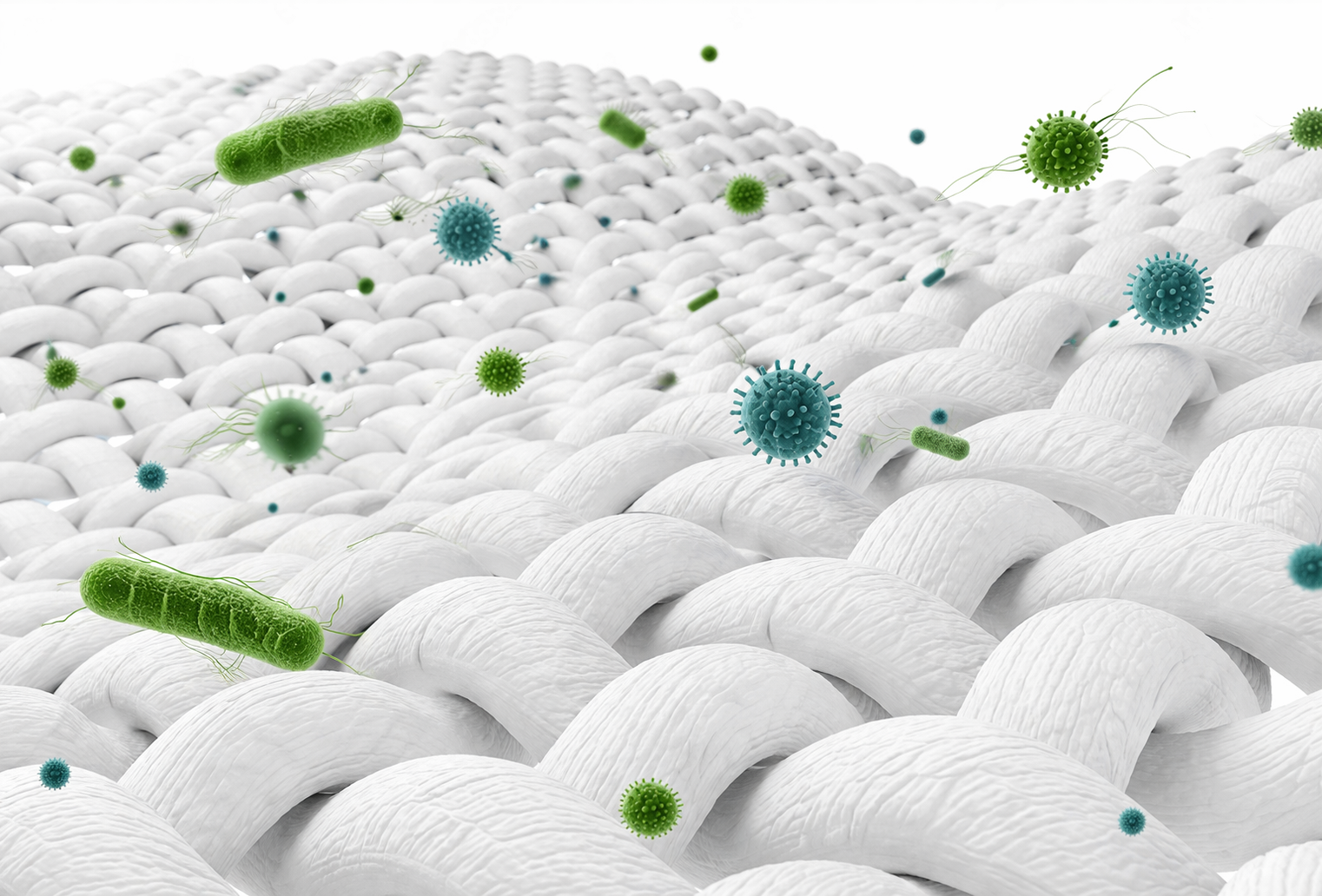
There are two main ways to add bacteria-inhibiting properties to fabrics: coating, where the active substance is applied to the fabric surface after weaving, and embedding, where the active substance is incorporated into the fiber during the fiber production process. The key difference is durability. Coated fabrics gradually lose effectiveness after repeated washing, while embedded fabrics can maintain more than 99% bacteria-inhibiting performance even after 150 washes.
This article will help you understand the difference between these two methods so you can choose the right fabric for your application.
What is coating?
Coating is the process of applying a bacteria-inhibiting substance onto the outer surface of a finished fabric, similar to painting a wall.
Advantages: The process is relatively simple, the initial cost is lower, and it can be used with many types of fabric.
Limitations: Since the active substance is only attached to the outer surface, it gradually comes off during washing and regular friction from use. This leaching causes the performance to decline over time, and the released substance may also contaminate water sources.
What is embedding?
Embedding is the process of incorporating the bacteria-inhibiting substance directly into the fiber during fiber production. It is similar to adding color into plastic itself, rather than coating it only on the outside. As a result, the active substance becomes part of the fiber from the beginning.
Advantages: The substance does not peel off or leach out, allowing the fabric to maintain more than 99% bacteria-inhibiting performance throughout its lifespan, even after more than 150 washes.
Environmental benefit: No chemical substances are released into water during washing. It also helps extend the lifespan of the product, which can reduce textile waste over the long term.
Clear comparison: Coating vs. Embedding
| Topic | Coating | Embedding |
|---|---|---|
| Method | Applies the active substance onto the fabric surface after weaving | Incorporates the active substance into the fiber during production |
| Durability | Gradually decreases with washing | Remains effective throughout the product lifespan, 150+ washes |
| Leaching | Substance may leach into water | Non-leaching |
| Skin safety | The substance may come into contact with the skin | Does not migrate out to contact the skin |
| Initial cost | Lower | Higher |
| Long-term value | Lower, performance declines and replacement is needed more often | Higher, lasts throughout the fabric lifespan |
| Best suited for | Disposable or short-term products | Sportswear, medical uniforms, hotel textiles, underwear |
Which one should you choose?
It depends on the intended use.
If the product is for short-term use or is disposable, coating may be a more cost-effective option in terms of initial investment.
However, if the product is intended for long-term use, frequent washing, and requires reliable bacteria-inhibiting performance over time, such as activewear, medical uniforms, hotel bed linens, or underwear, embedded technology offers better long-term value.
In addition, international standards such as OEKO-TEX® Standard 100 pay attention to chemicals that may be released and come into contact with the skin. Choosing a technology in which the active substance is embedded in the fiber can make it easier for products to meet safety standards.
If you are interested in learning more about embedded bacteria-inhibiting fiber technology, you can find more information at permacorporation.com.
Frequently Asked Questions
Will the bacteria-inhibiting performance decrease after many washes?
If the fabric uses embedded technology, the performance will not decrease because the active substance is integrated into the fiber itself. According to testing under ISO 20743, it still maintains more than 99% bacteria-inhibiting performance even after 150 washes. This is different from coated fabrics, where performance declines as the number of washes increases.
Is embedded fabric safe for sensitive skin?
Yes. Since embedded technology is non-leaching, the active substance does not migrate out to come into contact with the skin. Fabrics made with this technology can meet OEKO-TEX® Standard 100 Class I, which is suitable for products intended for babies, and can also pass ISO 10993-5 cytotoxicity testing, the same standard used for medical devices.
Can you tell by looking whether a fabric is coated or embedded?
It is difficult to tell with the naked eye. The most reliable way is to check wash durability test results, leaching test results, and certifications from a trustworthy manufacturer.
How does embedded technology help the environment?
It helps in two ways: it reduces water pollution because no chemicals are released during washing, and it extends the lifespan of the product, which helps reduce textile waste.
What types of products are embedded bacteria-inhibiting fabrics suitable for?
They are suitable for products that require cleanliness and durability, such as medical uniforms, sportswear, underwear, bed linens, and hotel textiles that are washed frequently.
References
- OEKO-TEX® Standard 100
- ISO 20743, testing standard for bacteria-inhibiting properties in textiles
- ISO 10993-5:2009, cytotoxicity testing standard